The Ultimate SaaS Application Development Guide
A quick guide to choosing the right approach for your product idea.
- The Ultimate SaaS Application Development Guide [2025 Edition]
- What Is SaaS Application Development?
- What Are the Benefits of Building a SaaS Application?
- What Is the SaaS Application Development Process?
- What Are The Challenges to Consider Before SaaS Application Development
- What Is the SaaS Application Development Cost?
- How to Choose a SaaS Application Development Company
- FAQs
The Ultimate SaaS Application Development Guide
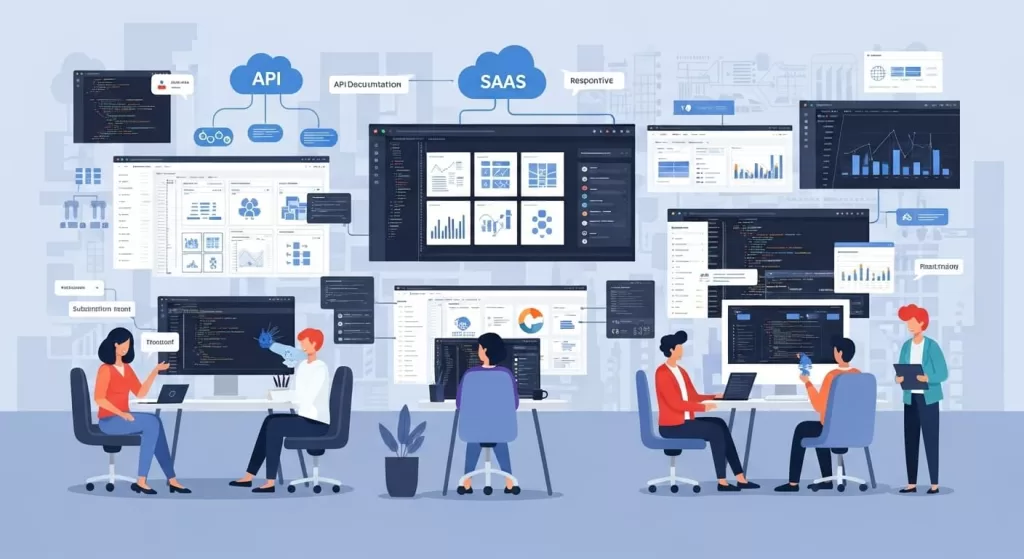
In 2025, Software as a Service (SaaS) is no longer merely a delivery model; it has become the foundation of digital business. With features like AI-driven automation and usage-based pricing, SaaS has established itself as the standard framework for scalable platforms that generate recurring revenue.
But here’s the catch: building a SaaS product that thrives isn’t about copying templates; it’s about mastering product-market fit, making smart decisions from day one, and growing steadily without burning out or breaking things.
Whether you’re a startup founder with a game-changing idea or a product leader modernizing legacy tools, this SaaS development guide will walk you through every critical phase from crafting your first MVP to choosing the right pricing strategy, tech stack, and team.
No filler. No fluff. Just the real-world, 2025-ready roadmap to SaaS success.
What Is SaaS Application Development?
SaaS (Software as a Service) application development is the process of creating cloud-based software that users can access over the internet through a subscription or usage-based pricing model.
Instead of downloading software, users access it via web browsers or mobile apps. The provider handles everything, including hosting, updates, data storage, security, and ongoing maintenance.
Popular SaaS products include tools like Slack, Notion, HubSpot, and Shopify, but SaaS can power everything from finance and healthcare apps to learning platforms and CRM systems.
What Are the Benefits of Building a SaaS Application?
Developing a SaaS product in 2025 opens doors to scalability, predictability, and user-centric innovation. Here’s why businesses prefer it:
-
Recurring Revenue:
Flexible SaaS pricing models like freemium, tiered, and usage-based provide reliable income streams.
-
Lower Customer Entry Barriers:
No installation or upfront cost. Just sign up and use it.
-
Easy Maintenance & Updates:
Push bug fixes and new features in real-time.
-
Global Reach:
Deploy once, and serve users worldwide.
-
Scalability:
Your product grows with your customers automatically.
What Is the SaaS Application Development Process?
-
Market Research & Validation:
Before writing a single line of code, validate your idea. Who are your users? What problem does your SaaS solve?
-
Define Your SaaS MVP:
Don’t build everything at once. Focus on core features. Validate your assumptions. Iterate fast.
-
Choose Your SaaS Tech Stack:
Select reliable technologies that support scalability, security, and speed. Popular SaaS tech stack choices include React, Node.js, AWS, PostgreSQL, and Docker.
-
Design the Architecture:
Opt for a multi-tenant architecture for efficiency and scalability. Consider third-party APIs, CI/CD pipelines, and containerization (like Docker and Kubernetes).
-
UI/UX Design:
SaaS users expect an elegant, intuitive, and responsive design. Tools like Figma and Adobe XD are standard.
-
Development & Testing:
Develop iteratively with an agile methodology. Prioritize automated testing to ensure code quality.
-
Launch & Monitor:
Deploy using DevOps practices. Integrate real-time monitoring tools and gather user feedback for continuous improvement.
What Are The Challenges to Consider Before SaaS Application Development?
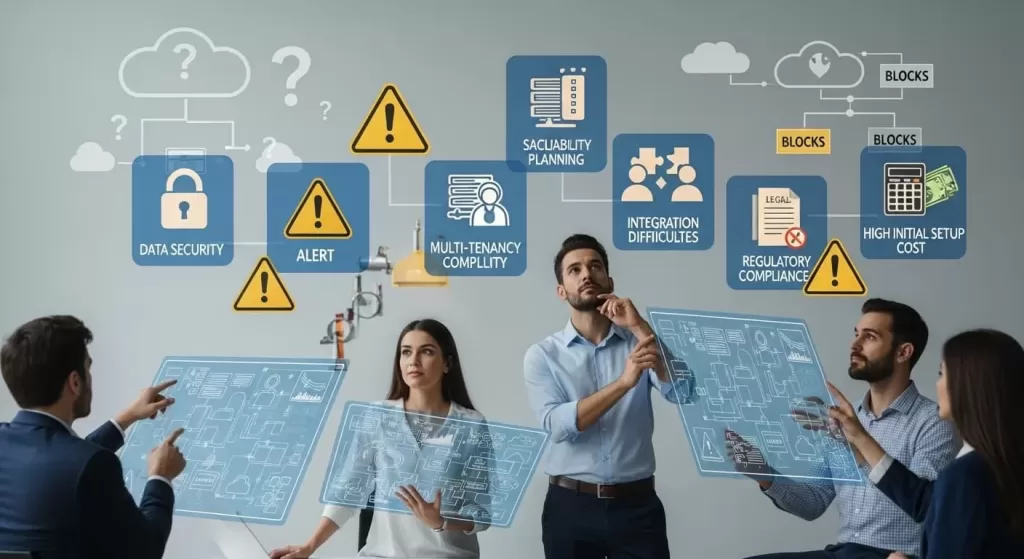
Before you leap into building your dream SaaS product, be prepared for some common roadblocks:
- Choosing the right SaaS pricing model (freemium, tiered, usage-based)
- Data security and compliance (GDPR, HIPAA, SOC 2)
- Multi-tenancy architecture complexity
- Customer onboarding and retention
- Scalability and performance under load
- Handling integrations with third-party APIs
- Balancing feature-richness with simplicity
Outsourcing SaaS development to the right team can help you overcome many of these hurdles effectively.
What Is the SaaS Application Development Cost?
There’s no one-size-fits-all number, but SaaS development cost typically depends on:
- Project scope and complexity
- Chosen tech stack
- Development timeline
- Team expertise and location
Estimated SaaS MVP development cost ranges from $20,000 to $80,000, while building a robust full-featured product could go above $150,000, especially if it includes complex integrations or enterprise-level security.
Choosing the right SaaS pricing model also affects profitability and long-term ROI.
How to Choose a SaaS Application Development Company?
With hundreds of vendors out there, selecting the right SaaS development company is a critical decision. Here’s what to consider:
-
Technical Expertise:
Are they experienced with your chosen tech stack?
-
Portfolio:
Have they built SaaS platforms in your industry?
-
Communication:
Is their process transparent and collaborative?
-
Security & DevOps:
Do they bake in best practices from day one?
-
Post-Launch Support:
SaaS is a long game. Ensure they’re in it with you.
At Tech Formation, we help you strategize, build, and scale robust SaaS platforms tailored to 2025’s landscape.
Are You Ready to Launch or Level Up Your SaaS?
Let’s turn your vision into a high-performing SaaS product.
Book your free consultation with Tech Formation and get expert guidance tailored to your goals.
FAQs:
1. How long does it take to develop a SaaS application?
Anywhere from 3 to 9 months, depending on the scope, features, and number of iterations involved.
2. What is the best tech stack for SaaS development?
It depends on your product goals, but common stacks include React or Vue.js for the front-end, Node.js or Django for the back-end, PostgreSQL or MongoDB for the database, and AWS or GCP for cloud services.
3. Is SaaS development different from traditional software development?
Yes. SaaS is built for multi-tenancy, subscription models, remote access, and continuous delivery, which require a different approach to architecture, security, and scalability.
4. Can I build a SaaS product without coding knowledge?
Yes, you can use low-code or no-code platforms to build MVPs or internal tools. However, for scalable products, you’ll likely need a professional development team.
4. What security features should a SaaS app include?
Role-based access, end-to-end encryption, secure data storage, compliance with regulations (GDPR, HIPAA), and real-time threat monitoring.

Article by
Shweta Rajput
Business Development Executive | Content Strategist at Tech Formation
Shweta drives business growth and brand communication at Tech Formation by aligning strategic content with client-focused development. Backed by a strong foundation in content creation, the role focuses on enhancing market presence, shaping impactful narratives, and supporting meaningful business engagement.
Let’s Connect and Create Something Remarkable