2025 Software Development Trends Explained
A quick guide to choosing the right approach for your product idea.
- 2025 Software Development Trends Explained: Benefits & Real-World Use Cases
- AI-Driven Software Development
- Low-Code/No-Code Development Expansion
- Cloud-Native Development & Serverless Architecture
- DevSecOps Becomes Standard
- Sustainable (Green) Software Engineering
- Hyperautomation and RPA in Software Workflows
- Final Thoughts: Preparing for the Future of Software Development
2025 Software Development Trends Explained: Benefits & Real-World Use Cases
The software development industry in 2025 isn’t just evolving; it’s being revolutionized. From AI-powered engineering to low-code development, serverless architectures, and green software, what’s trending today is tomorrow’s new standard.
Understanding the latest trends in software development is no longer optional; it’s a competitive necessity. Whether you’re building from scratch or modernizing legacy systems, keeping up with the software development industry trends gives you a sharper edge, faster launches, and smarter innovation.
In this blog, we’ll decode the most important software development trends of 2025, explore their benefits, and show real-world use cases that prove their business impact.
Ready to future-proof your strategy? Let’s dive in.
AI-Driven Software Development
What’s New in AI in 2025
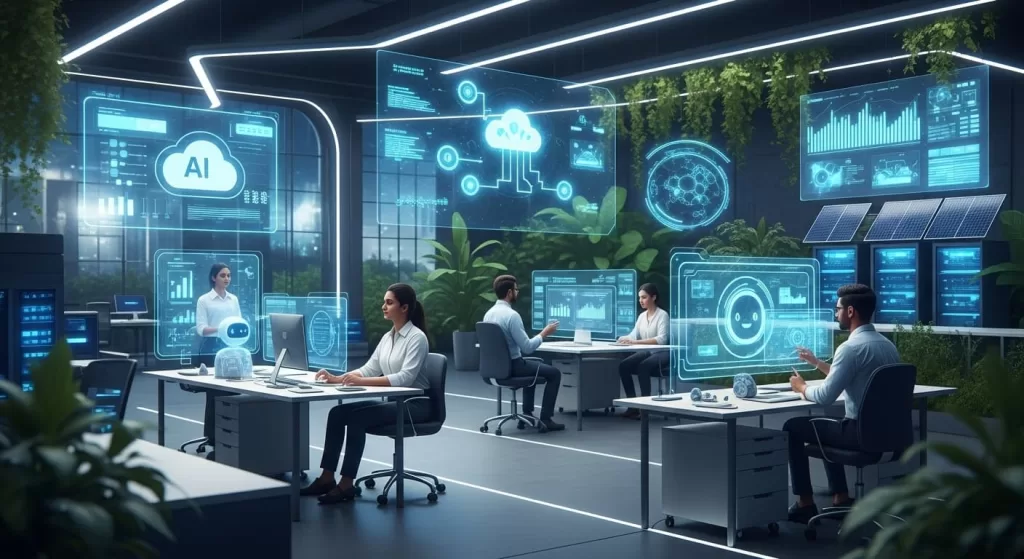
AI is no longer just assisting developers, it’s co-developing with them. Tools powered by generative AI (like GitHub Copilot X, CursorAI, or Tabnine) are capable of auto-generating boilerplate code, writing test cases, and even debugging entire modules with minimal human input.
What Are The Benefits of AI-Driven Software Development:
- Accelerated development cycles
- Reduction in manual coding errors
- Improved code quality and maintainability
- Smart documentation and versioning
What Are The Use Cases of AI:
- Fintech firms are using AI to auto-generate compliance logic.
- E-commerce platforms are optimizing personalized recommendations using AI algorithms.
- Healthcare systems are speeding up diagnostics through AI-integrated software.
Low-Code/No-Code Development Expansion
What’s New in Low Code / No Code in 2025:
Among the latest technologies in the software industry, low-code and no-code tools have become powerful enough to build enterprise-grade applications without needing full-stack teams. Tools like Mendix and OutSystems now support complex workflows and integrations.
What Are The Benefits of Low-Code Development:
- Faster time-to-market
- Lower development costs
- Wider accessibility in development
- Seamless cross-team collaboration
What Are The Use Cases of Low Code:
- Startups are validating MVPs rapidly without heavy dev investment.
- Enterprise teams are automating internal workflows via low-code dashboards.
- SMBs are creating client portals and CRMs with minimal coding.
Cloud-Native Development & Serverless Architecture
What’s Trending in Cloud Development:
In 2025, everything is cloud-native. Businesses are migrating to microservices and container-based deployments to maximize scalability and resilience. Serverless platforms, such as AWS Lambda, Google Cloud Functions, and Azure Functions, dominate the landscape.
What Are The Benefits of Cloud Architecture:
- Reduced infrastructure management
- Scalability on demand
- Cost optimization with pay-per-use models
- Improved application performance
What Are The Use Cases of Cloud Development:
- E-commerce apps handle traffic surges during flash sales using AWS Lambda.
- Logistics companies use cloud-native apps for real-time fleet tracking.
- Startups deploy MVPs without investing in large ops teams.
DevSecOps Becomes Standard
What is The 2025 Shift in DevOps:
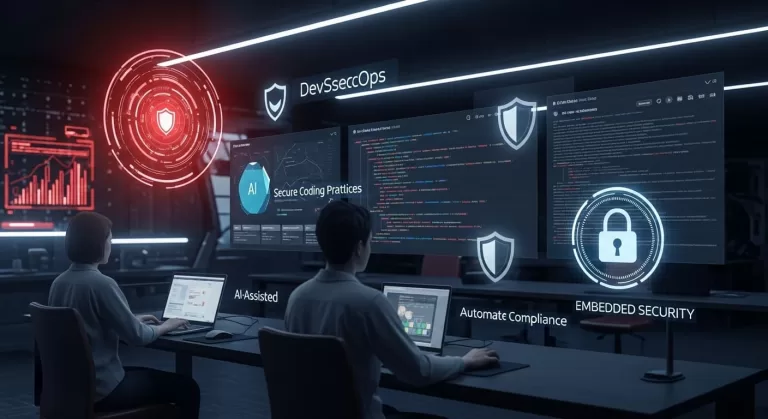
Security is no longer a step, it’s a mindset. With growing cyber threats, DevSecOps practices are embedded from day one, ensuring secure coding, automated compliance, and vulnerability scanning in CI/CD pipelines.
What Are The Benefits of DevSecOps:
- Enhanced application security
- Early detection of vulnerabilities
- Faster compliance audits
- Reduced cost of fixing post-release bugs
What Are The Use Cases of DevSecOps:
- Banks and financial services are embedding continuous security testing.
- Healthcare apps are automating HIPAA compliance.
- E-learning platforms are protecting user data from breaches.
Sustainable (Green) Software Engineering
Emerging Practice:
Sustainability is a strategic priority in 2025. Software development industry trends are increasingly focusing on energy-efficient coding and cloud infrastructure. Green software engineering ensures digital products minimize their environmental footprint.
What Are The Benefits of Green Software Engineeing:
- Lower energy consumption.
- Improved app performance and resource efficiency.
- Enhanced brand reputation and ESG compliance.
What Are The Use Cases of Green Software Engineering:
- Companies are optimizing code to run efficiently on devices, reducing energy usage.
- Data centers are being designed with sustainability in mind, utilizing renewable energy sources and efficient cooling systems.
Hyperautomation and RPA in Software Workflows
Trend Update:
A powerful shift in the latest software development trends is the adoption of hyperautomation, combining AI, machine learning, and RPA to automate end-to-end processes. This significantly reduces manual intervention and enhances efficiency.
What Are The Benefits of RPA:
- Significant cost and time savings
- Fewer human errors
- Scalable, intelligent processes
What Are The Use Cases of RPA:
- HR departments are automating hiring workflows.
- Customer service teams are using AI bots for L1 queries.
- IT teams are automating patch management and routine maintenance.
Final Thoughts: Preparing for the Future of Software Development
The latest trends in software development are not merely concepts for the future, they’re actively reshaping how digital products are built and scaled in 2025. Whether you’re a CTO, developer, or product strategist, understanding these software development trends is key to maintaining a competitive advantage.
Adopting the right technologies at the right time can help you drive innovation, reduce costs, and future-proof your systems.
Want to stay ahead of the curve in 2025?
At Tech Formation, we help you build future-ready solutions powered by the latest trends in software development.
Let’s shape tomorrow’s software, today.

Article by
Shweta Rajput
Business Development Executive | Content Strategist at Tech Formation
Shweta drives business growth and brand communication at Tech Formation by aligning strategic content with client-focused development. Backed by a strong foundation in content creation, the role focuses on enhancing market presence, shaping impactful narratives, and supporting meaningful business engagement.
Let’s Connect and Create Something Remarkable